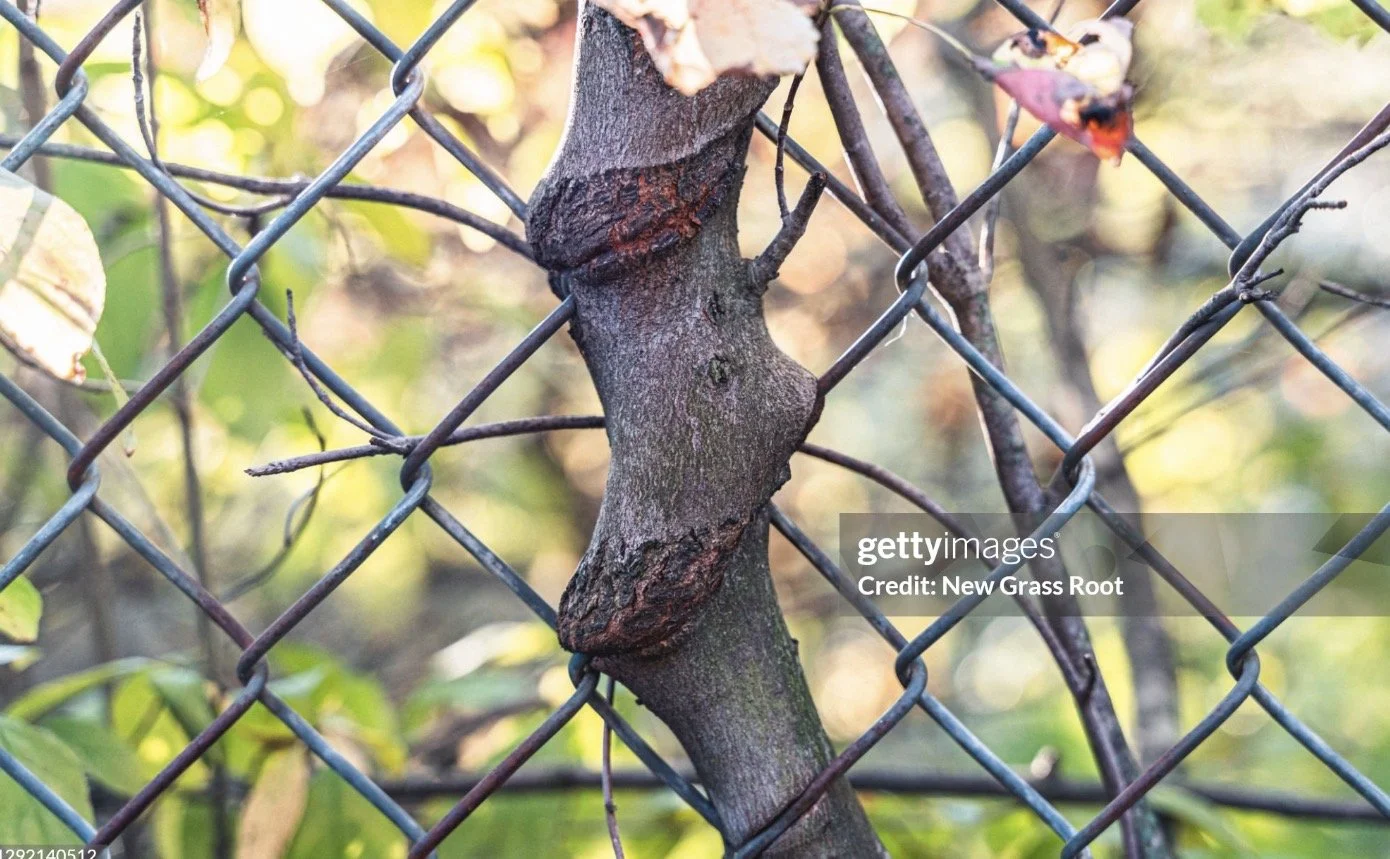
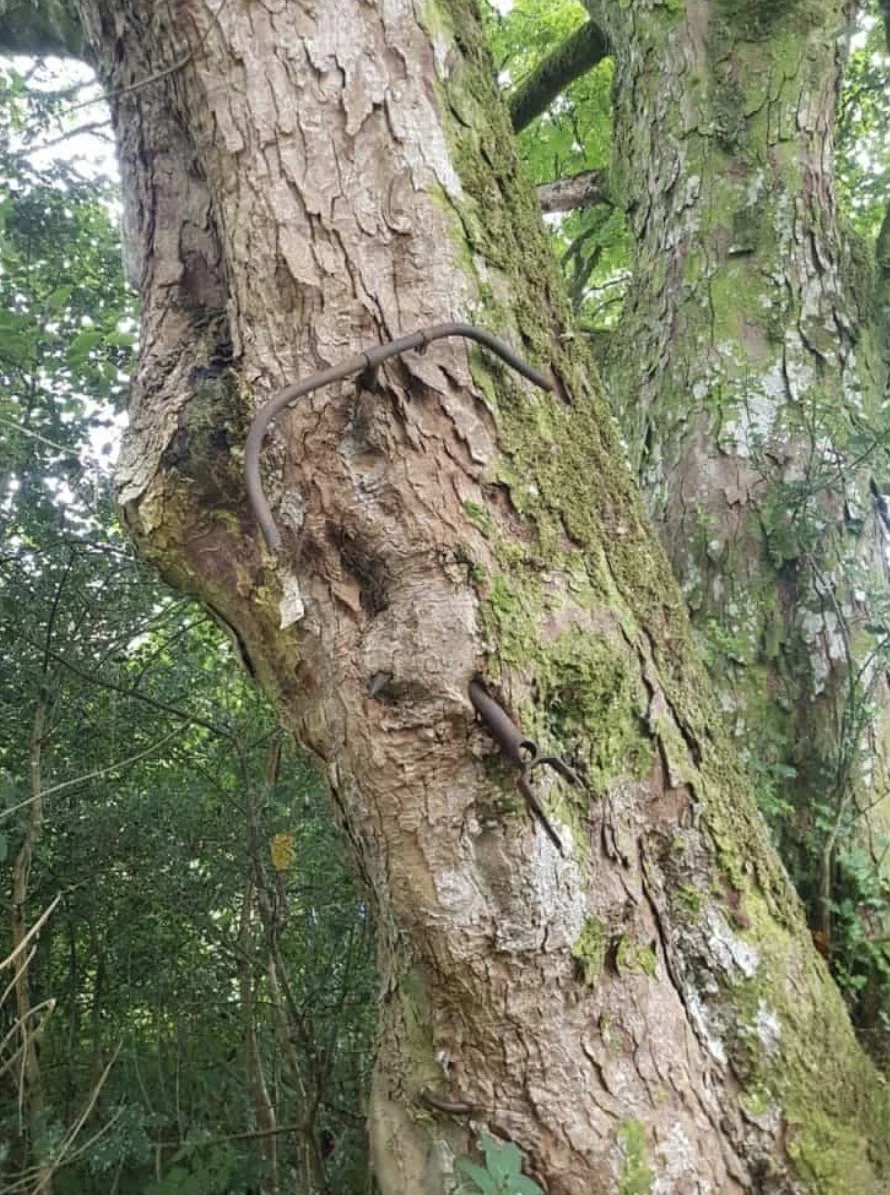
We’ve all seen the iconic photos of trees ‘eating’ things, growing around objects that are in their way and eventually absorbing them into their trunks. This incredible phenomenon, called edaphoecotropism (ed-daf-foh-co-trope-ism), happens when something is in a tree’s ‘path’ of outward growth, and the tree ends up slowly growing around it until that object is gone.
But how and why does this happen?
What is Edaphoecotropism?
First, let’s start with the name of what’s happening. Stemming from the Greek root words edaphos (of the soil) and tropism (the turning of an organism in a particular direction in response to an external stimulus), edaphoecotropism is the ability of woody plant tissue to avoid stressors or adapt to or incorporate mechanical obstacles.
In simpler terms, this refers to a tree’s ability to adapt to stressors in its environment by moving away from or around them. In the case of trees eating things, we’re talking about moving around objects, absorbing them.
How Exactly Does This Happen?
It’s simple; most of us know that trees can move, in a way. They grow towards light, their roots grow actively looking for moisture and nutrients. Trees are living organisms, so they react to their environments.
The Famous Bicycle Tree
Take perhaps the most famous example of edaphoecotropism, Scotland’s bicycle tree.
The story goes that a young Scottish soldier left his bicycle leaning against a Sycamore tree before going off to fight in the first World War, and never came back for it. Over time, the tree began to envelope the bike, lifting it several feet off the ground as it grew.
The tree still stands in Brig O’Turk, Stirling in Scotland today, where visitors can see the bike’s handlebars and parts of the frame sticking out of the huge tree.
Learn More: The Tree That Ate a Bicycle
Is It Harmful to the Tree?
While seeing a tree with various objects sticking out of it may make for a concerning visual, the general consensus is that it’s not inherently dangerous for the tree.
The Risks: The biggest risk is that edaphoecotropism can open a tree up to infections in some cases, it seems that it is generally not a reason to be concerned for the tree's health.
The Benefits: Some report that it can actually reinforce a tree’s structure (in the case of a tree engulfing something like a fence), and that the metal that ends up in trees doesn’t rust or break down, so it most likely won’t be harmful.
The Real Danger: For the most part, these objects usually only become destructive when the tree is being cut down, as they can badly damage blades and equipment.
Keep an Eye Out!
Next time you see a tree growing over a curb or a fence, now you’ll know you’re watching edaphoecotropism in action.