Step 1: Measure and Identify Your Tree
In order to remove a tree on a residential property within the city limits of Gainesville, Florida, there are a few pre-requisite steps you must endeavor to go through.
Firstly, you must measure the tree diameter at breast height (DBH). This means measuring the circumference of the tree at four and a half feet up from the ground (or 54 inches), and then calculating the diameter from the circumference.
Next, you must identify what species of tree you have. Different trees have different regulations that apply to them based on their population abundance and size. Trees above a certain size DBH qualify for “heritage tree” status at different sizes. Live oaks (Quercus virginiana), for example, are considered heritage trees at or above 20 inches DBH, while Laurel oak (Quercus laurifolia) only qualify for the same heritage status if they are larger than 30 inches DBH. These trees may look very similar to a homeowner, but have different legal standings according to the city. The most sure-fire way to ensure that you are correctly identifying the species is to employ an arborist or tree specialist to corroborate your conclusions.
Step 2: Submit the Permit Application and Receive Mitigation Requirements
Next, you would fill out the tree removal application and submit it to the city arborist who needs to verify that the tree qualifies for removal. If you live within the city limits, congrats! This is free.
If the city arborist agrees to your removal, they will approve your application and provide you with mitigation planting requirements. This could be a flat fee or a certain size and species of tree that you must plant on the property to make up for the loss of habitat and shade (i.e., ecosystem services) that the tree you are removing currently provides. They will also provide you with a timeline for re-planting any new mitigation trees.
Step 3: Remove the Tree and Source a Replacement
Once you either hire out or perform the removal yourself, you must acquire this new high quality shade tree which meets the grade requirement stated in the permit which is Florida Nursery Grade #1 or better.
Step 4: Properly Plant and Care for Your New Tree
Once you have planted the tree you must also keep it alive. Digging a hole and sticking a 15 gallon sapling in and backfilling the hole might not work out. Trees have delicate root systems and too much mulch too close to the bark could cause the roots to rot and the tree to die. Leave the soil bare and the root ball dries out and boom! Dead sapling. The best way to navigate the treacherous requirements of a picky sapling would be to ensure a specialist plants it at the correct depth with staking and mulch.
Upon hiring Arbor Conscious, we perform the entire permitting and replanting process for you AND provide you with specific post-planting instructions to ensure you are capable and confident when navigating the care of your new tree.
Edited Version 2:
Removing a tree within the city limits of Gainesville, Florida, involves a specific permitting process. Here is the step-by-step path to navigating city regulations and safely replacing your tree.
1. Calculate the Tree’s DBH First, measure the tree’s Diameter at Breast Height (DBH). Measure the trunk's circumference at 4.5 feet (54 inches) above the ground, then divide that number by π (≈3.14) to determine the diameter.
2. Identify the Species Gainesville regulates trees differently based on species, size, and local population. Tree size determines whether your tree qualifies for protected "Heritage" status:
Live Oak: Reaches Heritage status at 20+ inches DBH.
Laurel Oak: Reaches Heritage status at 30+ inches DBH.
Because these species look remarkably similar to the untrained eye, hiring a certified arborist to confirm the species is the safest way to avoid regulatory issues.
3. Submit the Permit Application Fill out a tree removal application and submit it to the city arborist. They will review the site to confirm whether the tree qualifies for removal under city codes.
4. Review Mitigation Requirements If approved, your permit will outline specific mitigation obligations to offset the lost canopy and habitat:
Fee or Replanting: You may need to pay a flat fee or plant replacement trees of a specific size and species.
Timeline: The city will set a strict deadline for completing any required replanting.
Quality Standards: Replacement stock must meet or exceed Florida Nursery Grade #1 standards.
5. Plant and Establish the Replacement Tree Proper installation is critical to keeping young saplings alive:
Avoid Over-Mulching: Piling mulch directly against the bark traps moisture and causes trunk rot.
Protect the Root Ball: Exposed roots dry out rapidly, killing the sapling before it establishes.
Plant at the Correct Depth: Planting too deep suffocates root systems.
Let Arbor Conscious Handle the Hassle
Navigating Gainesville’s tree codes and establishing delicate replacement saplings takes time and precision. Arbor Conscious handles the entire permitting process, manages proper replanting with correct depth and staking, and provides tailored post-care instructions so your new tree thrives. Contact us today to get started!
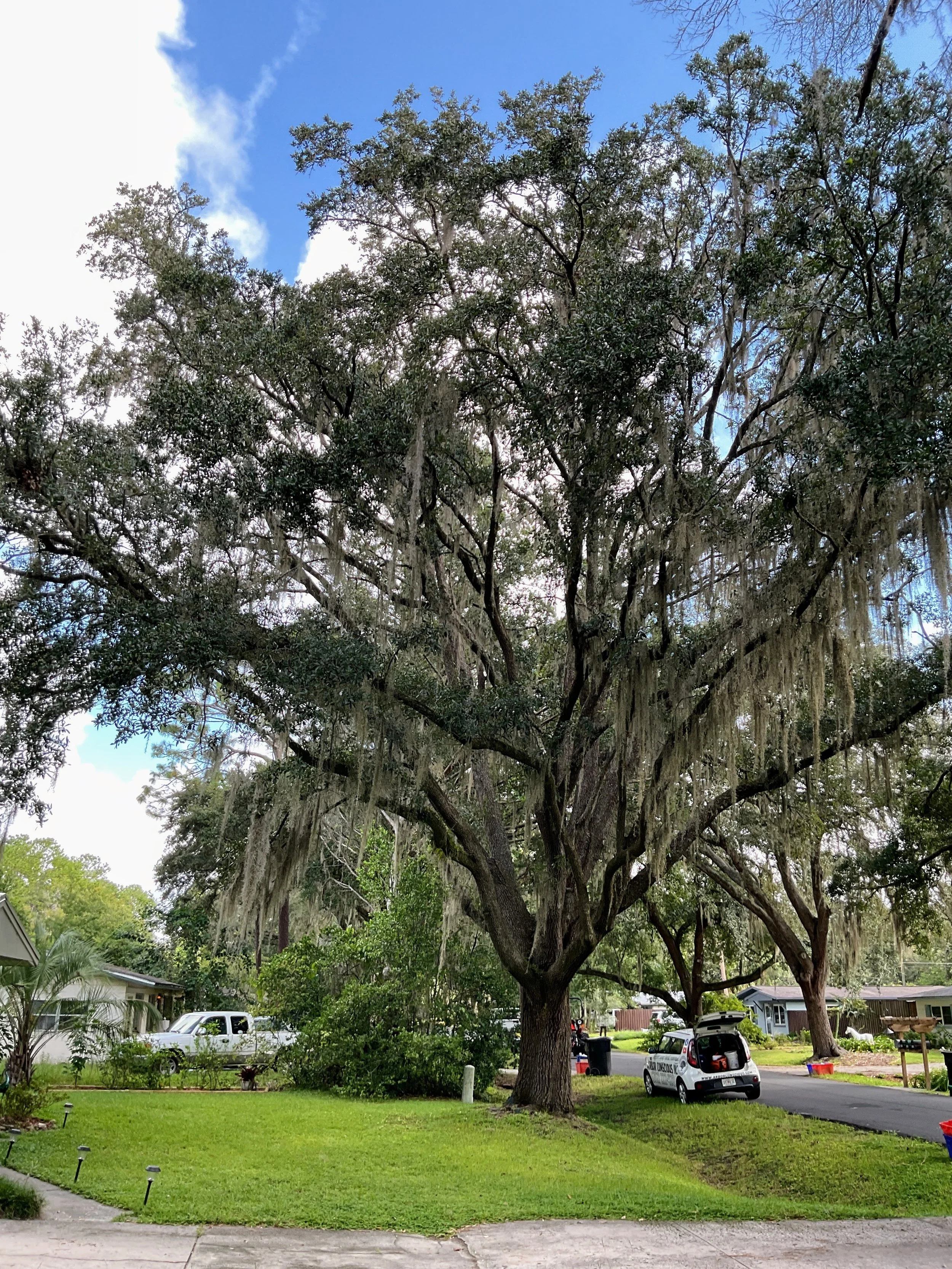
Heritage Live oak
